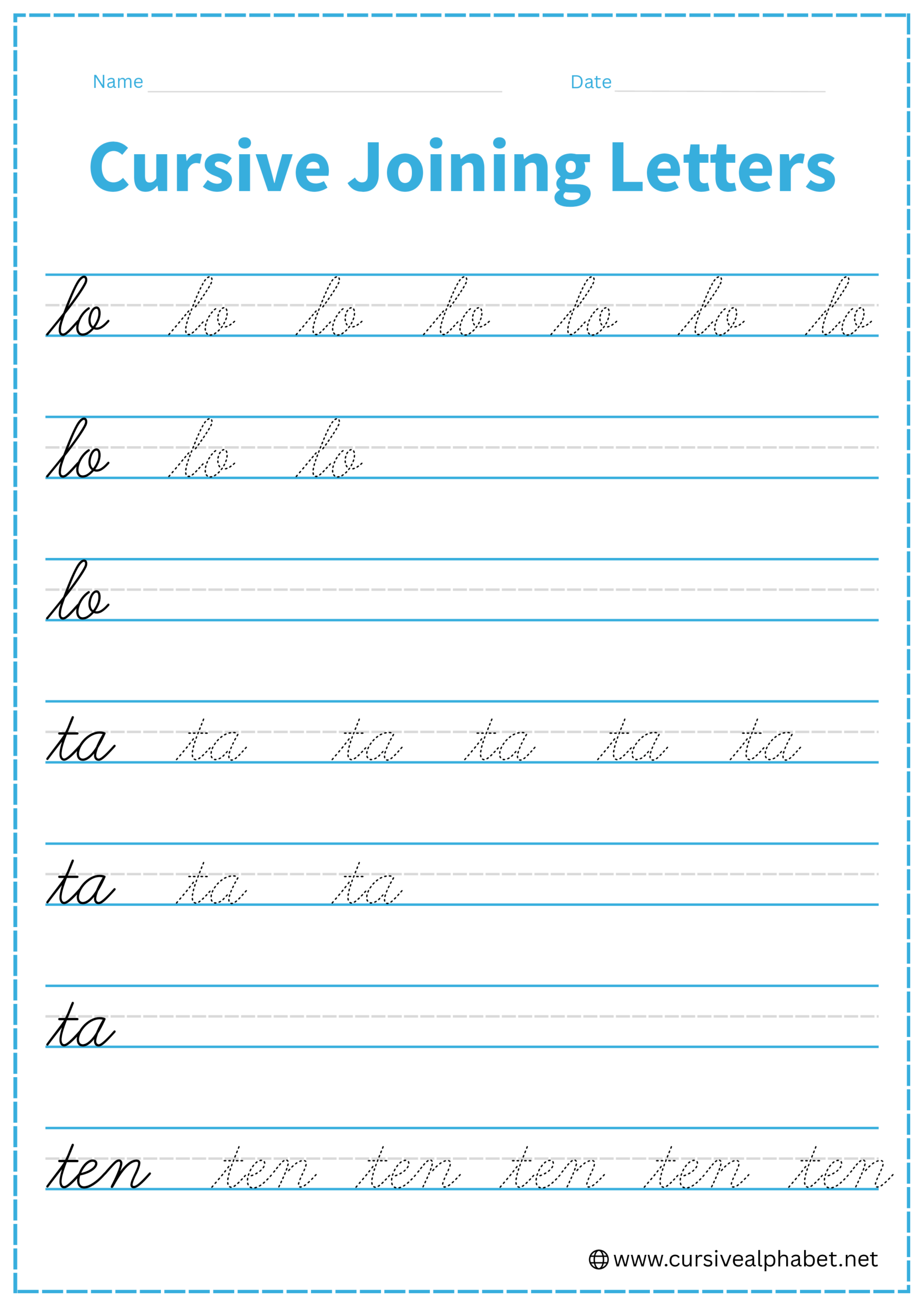
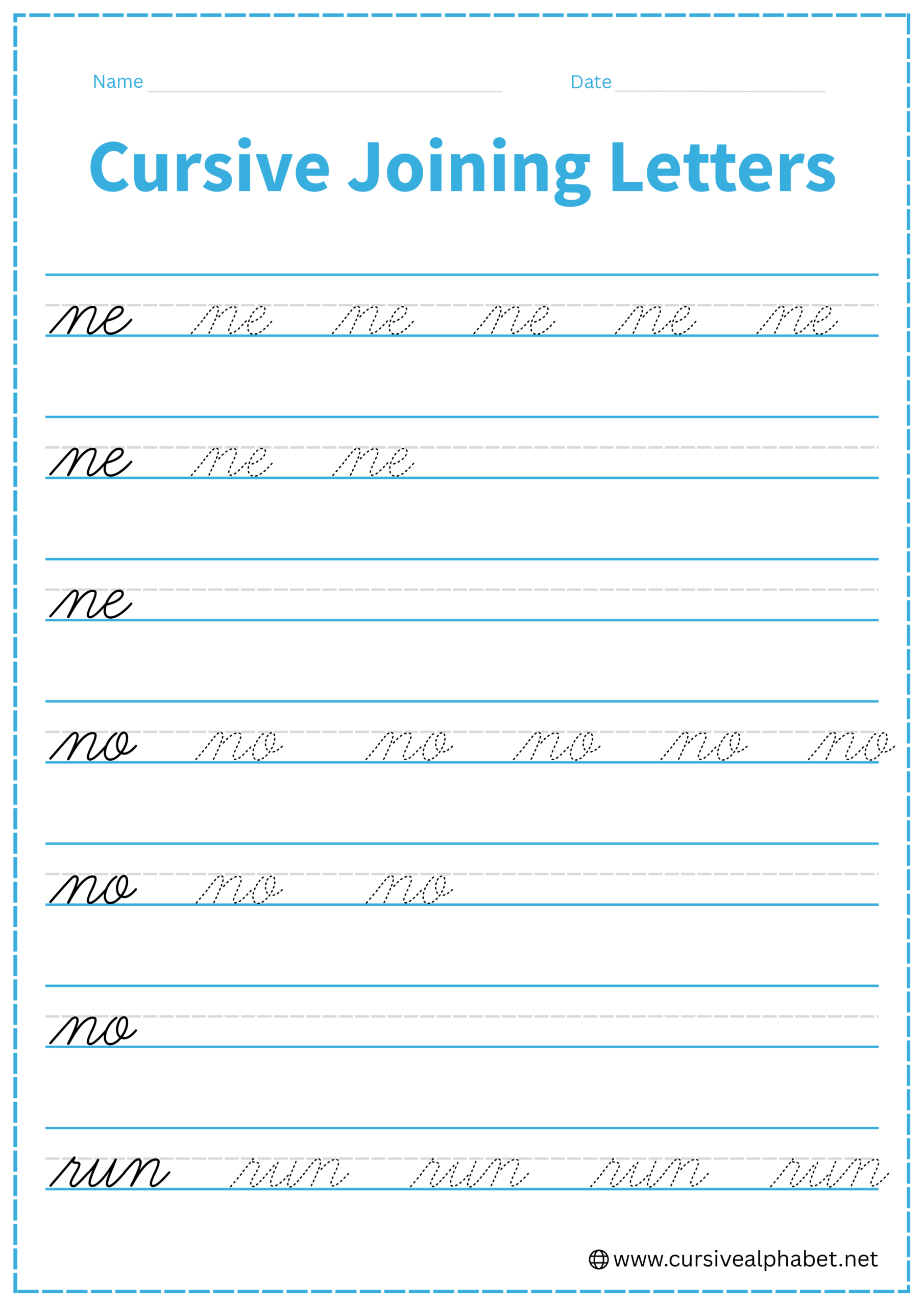
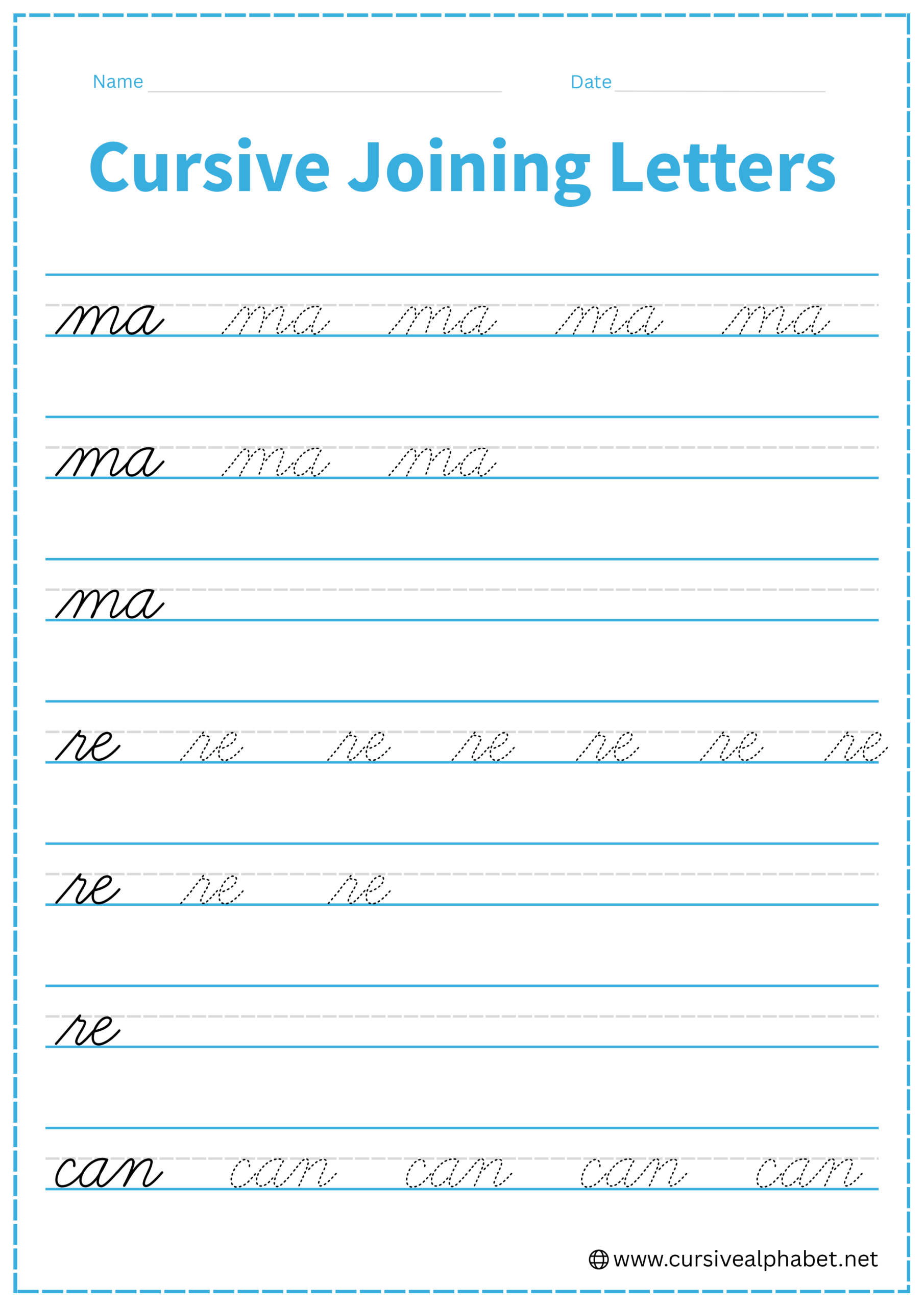
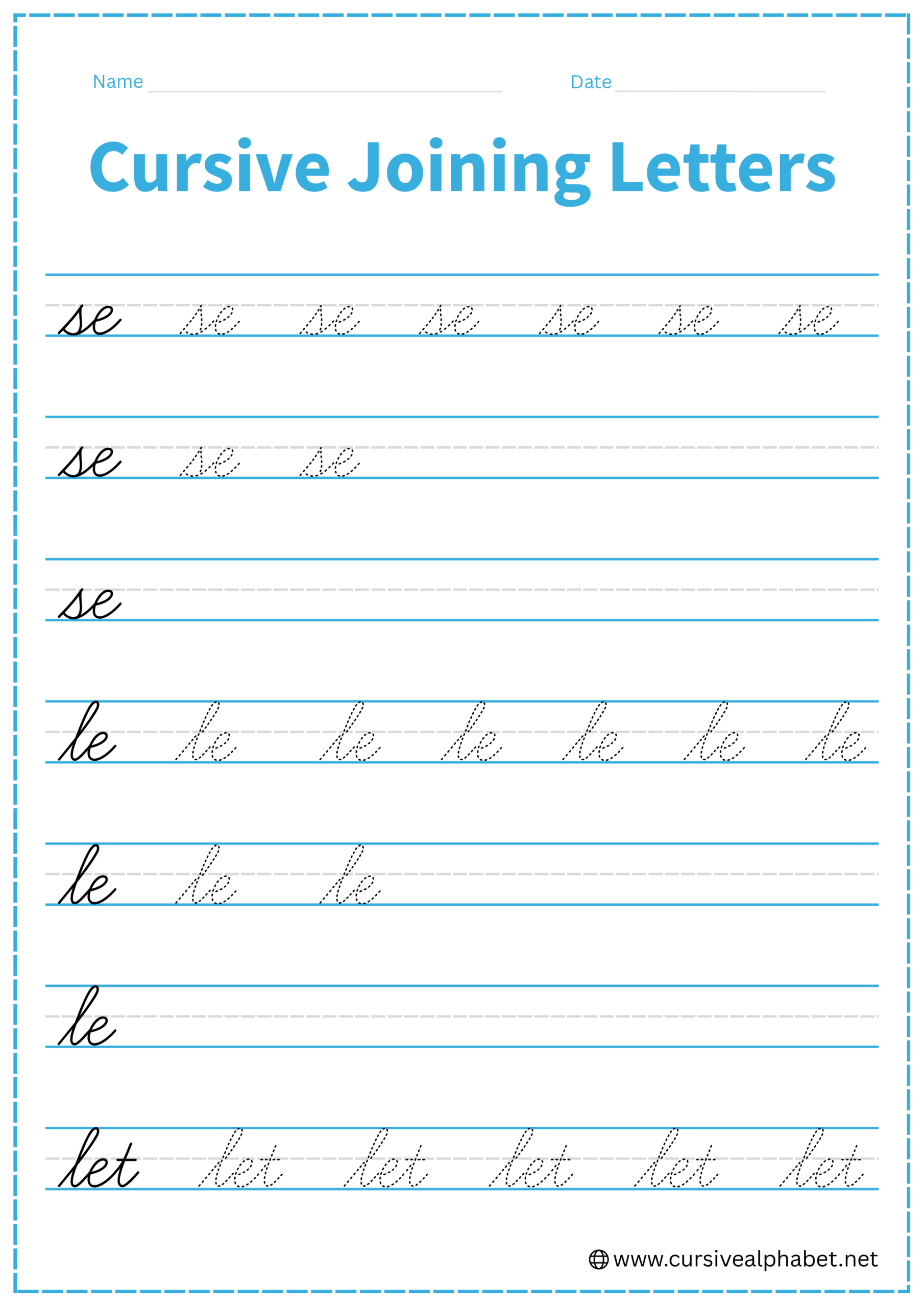
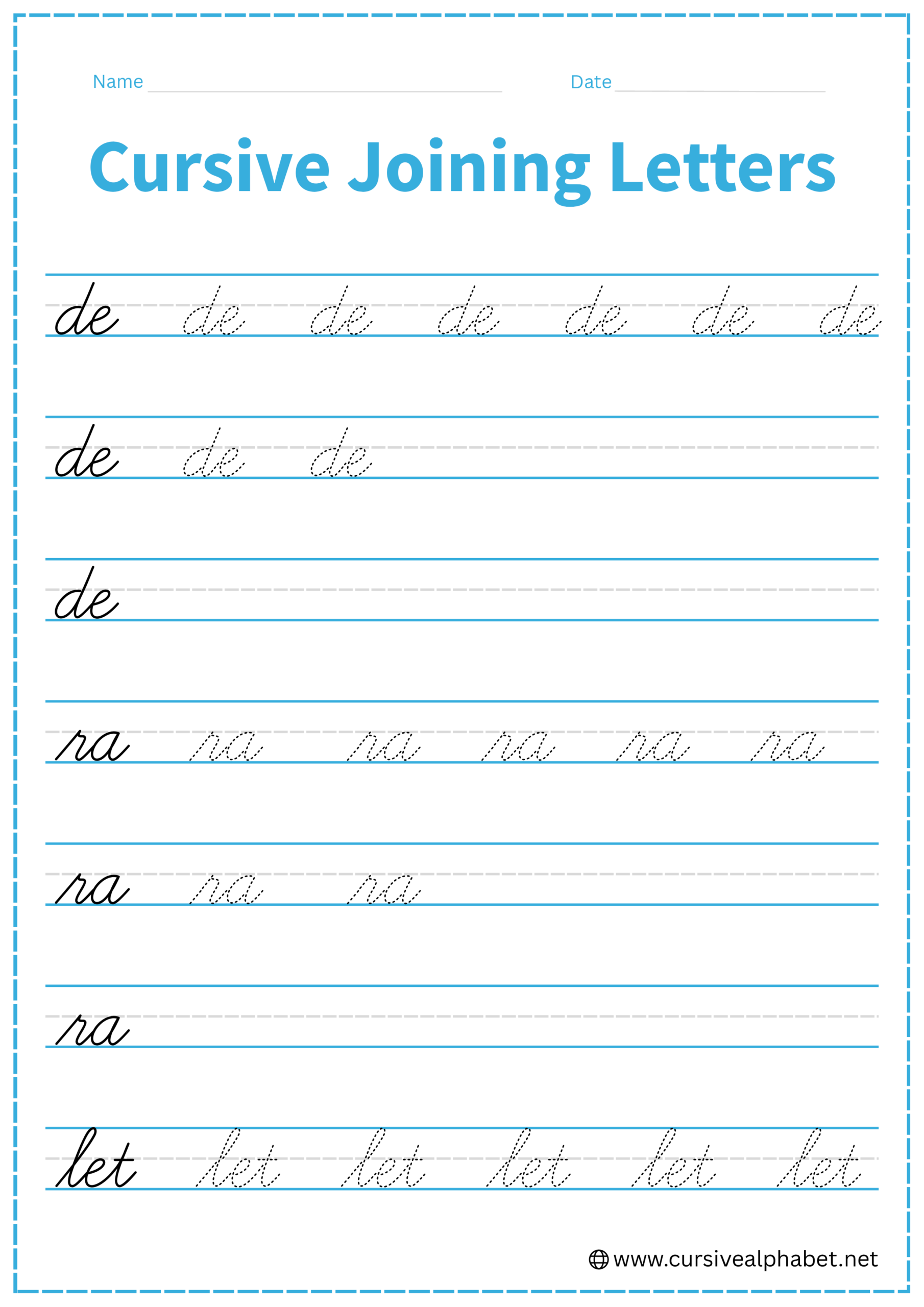
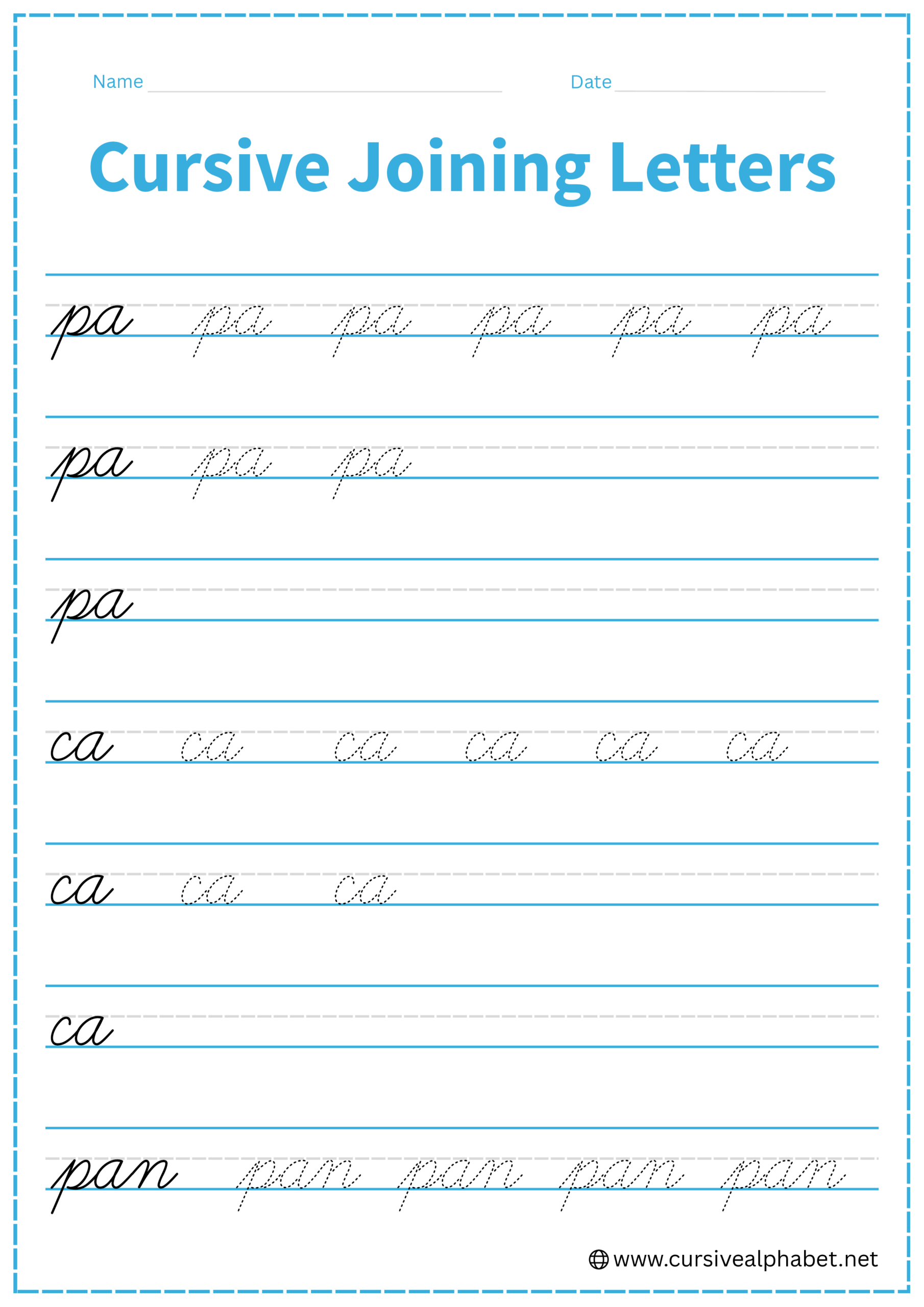
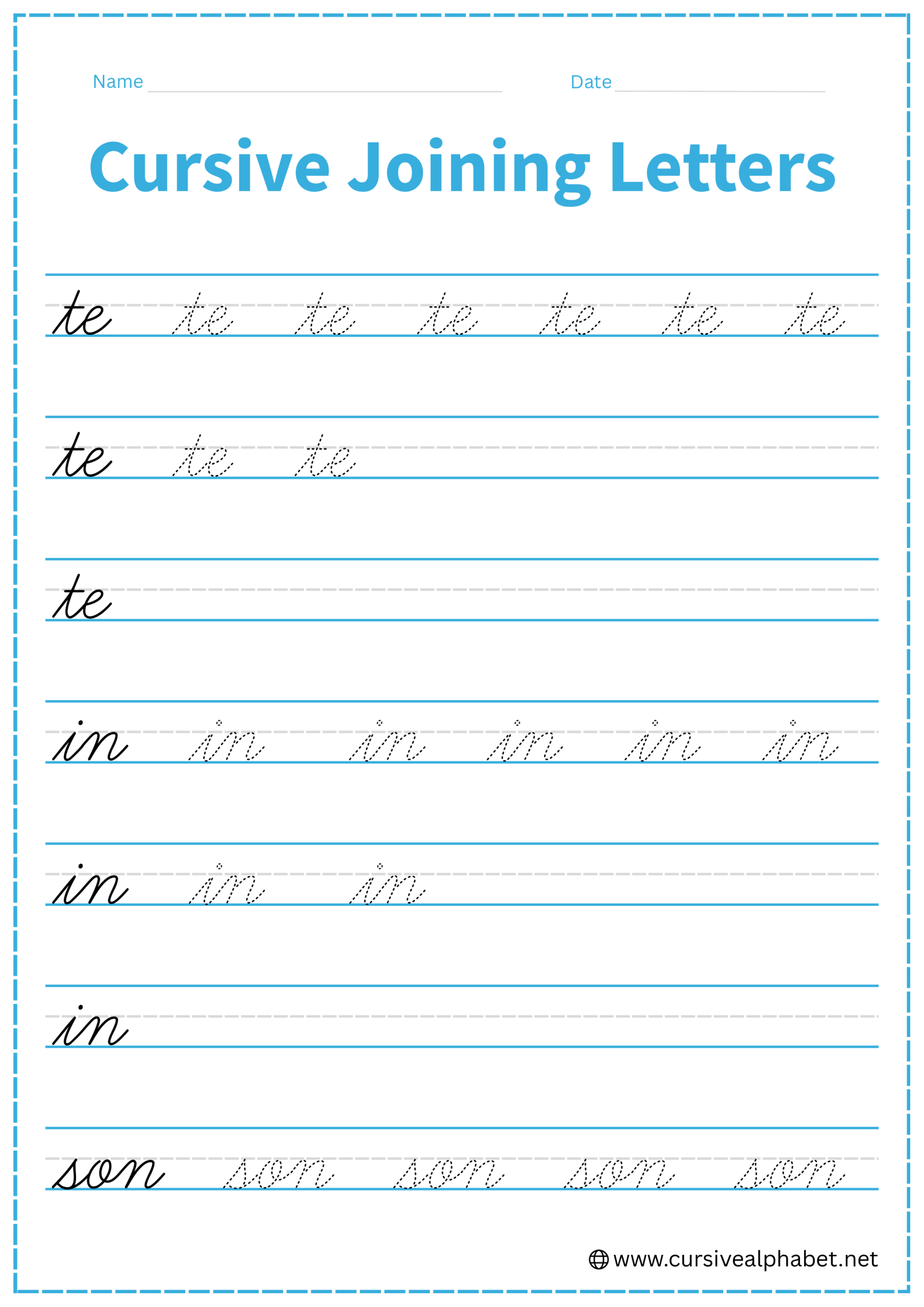
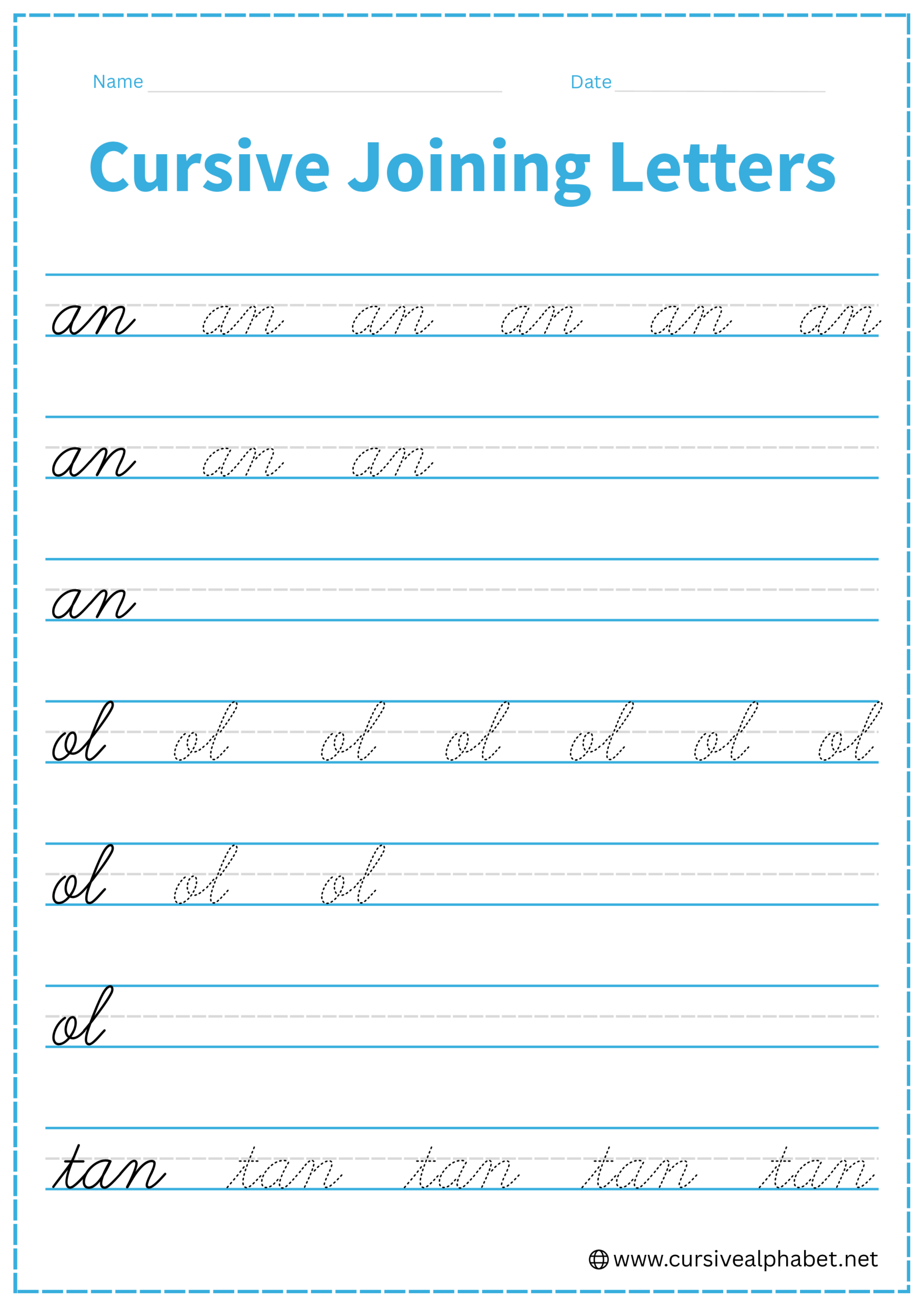
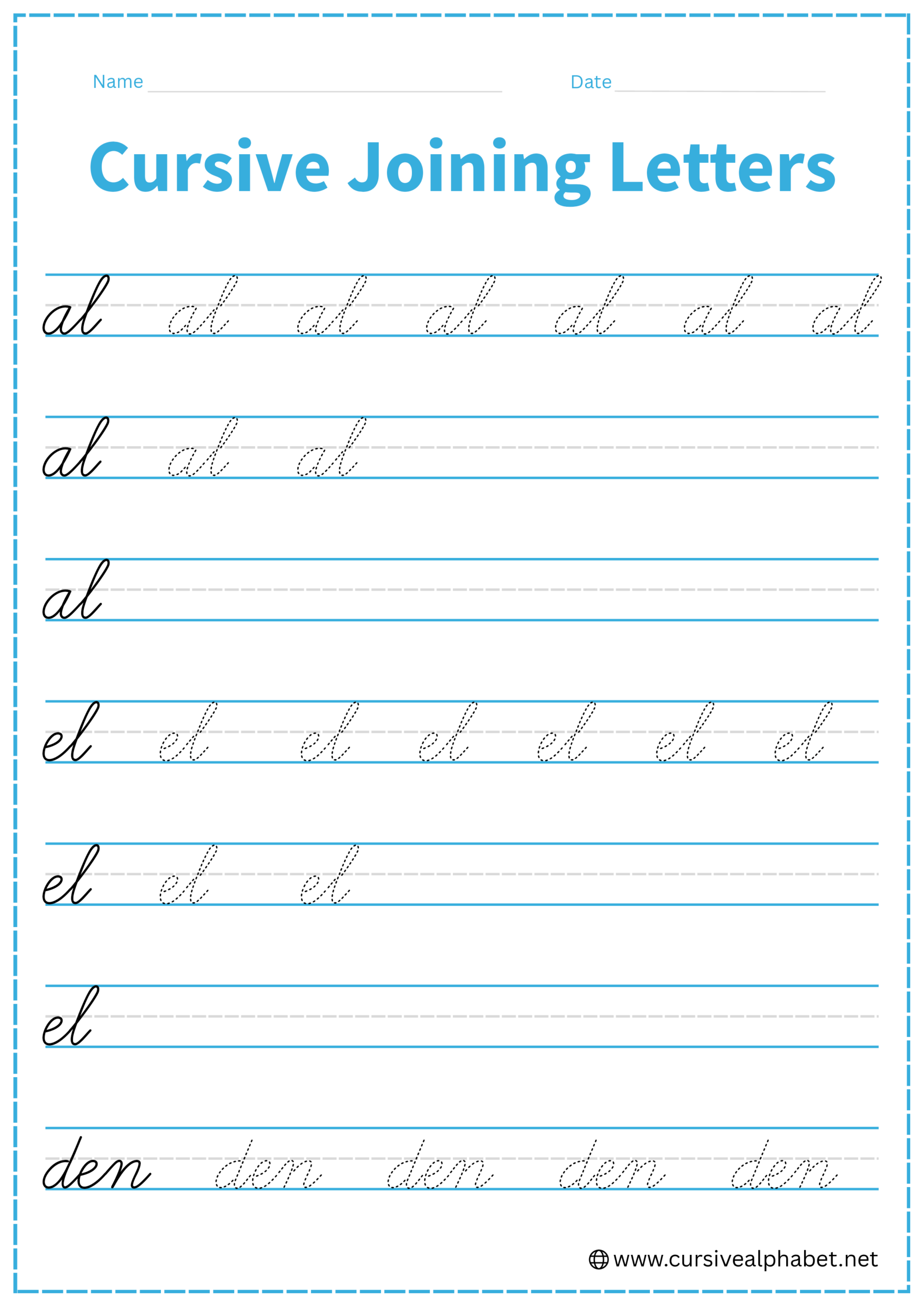
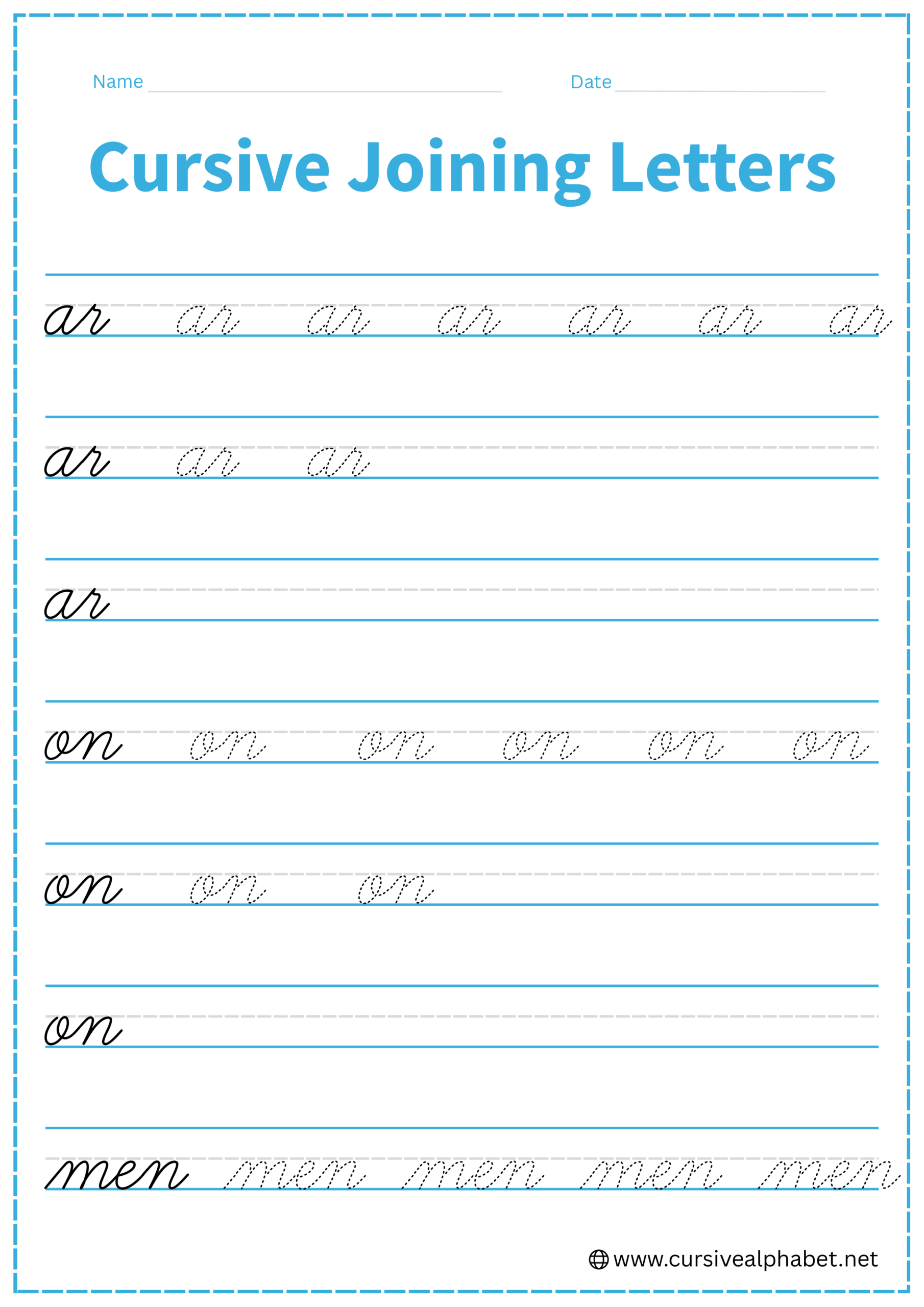
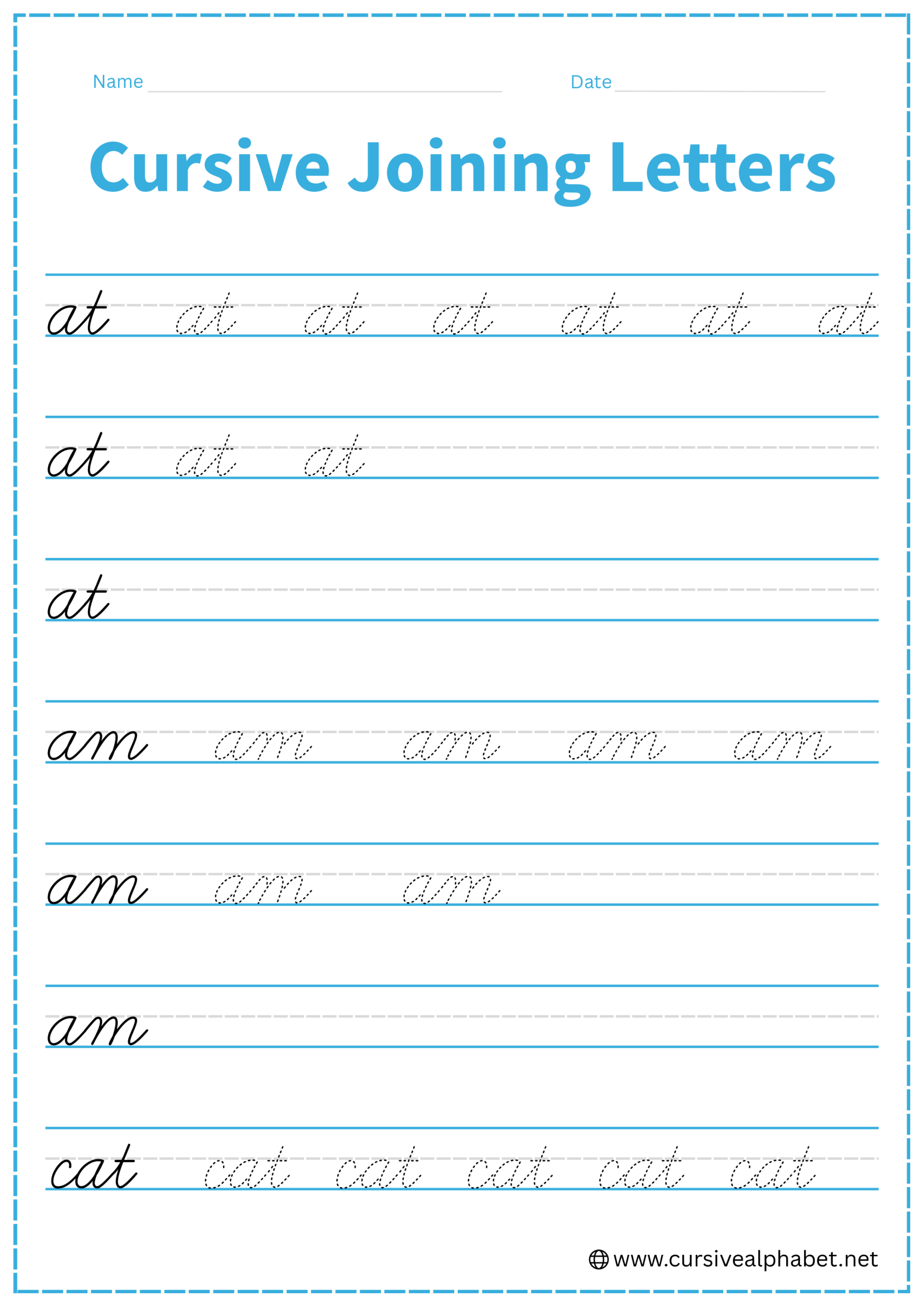
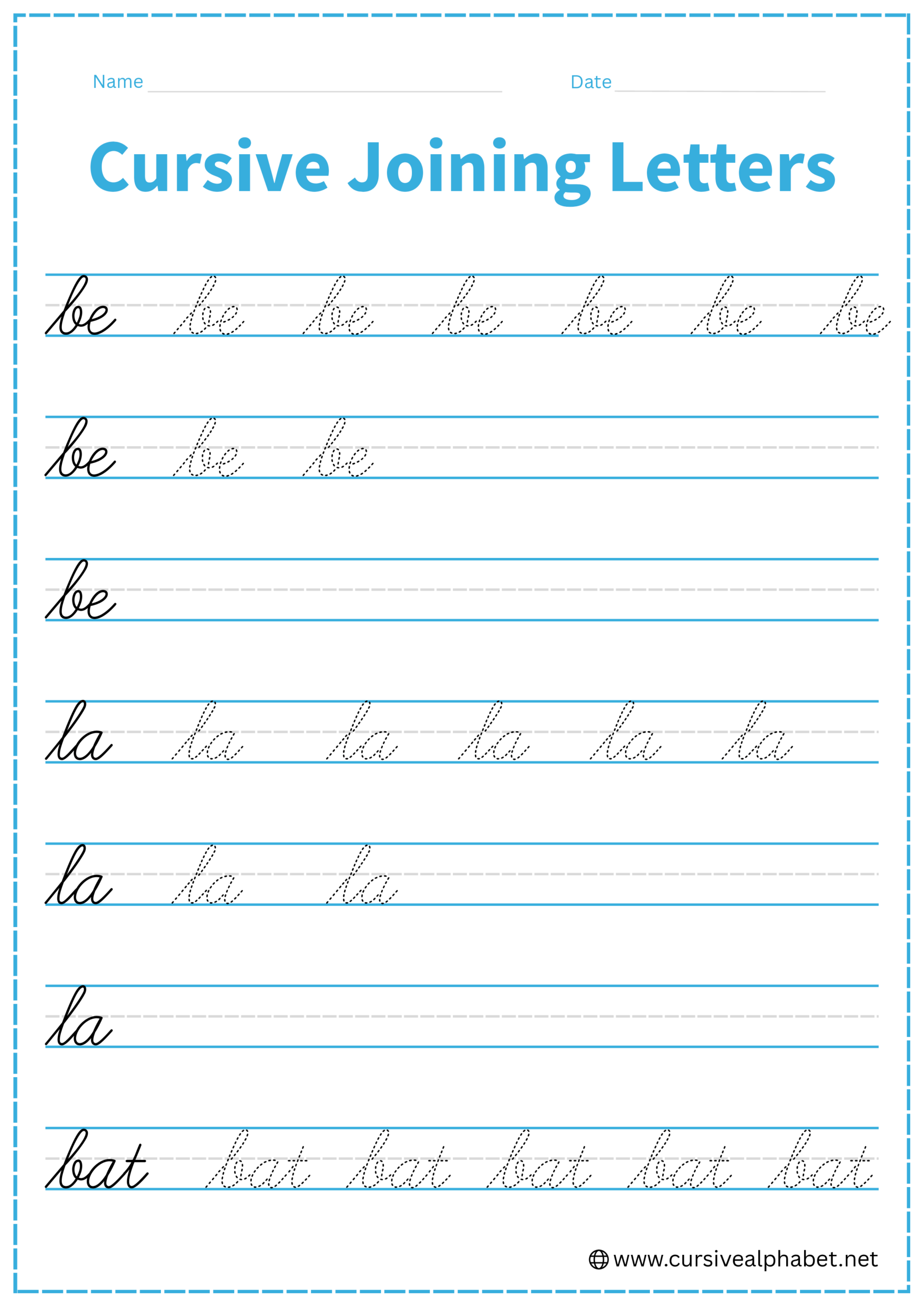
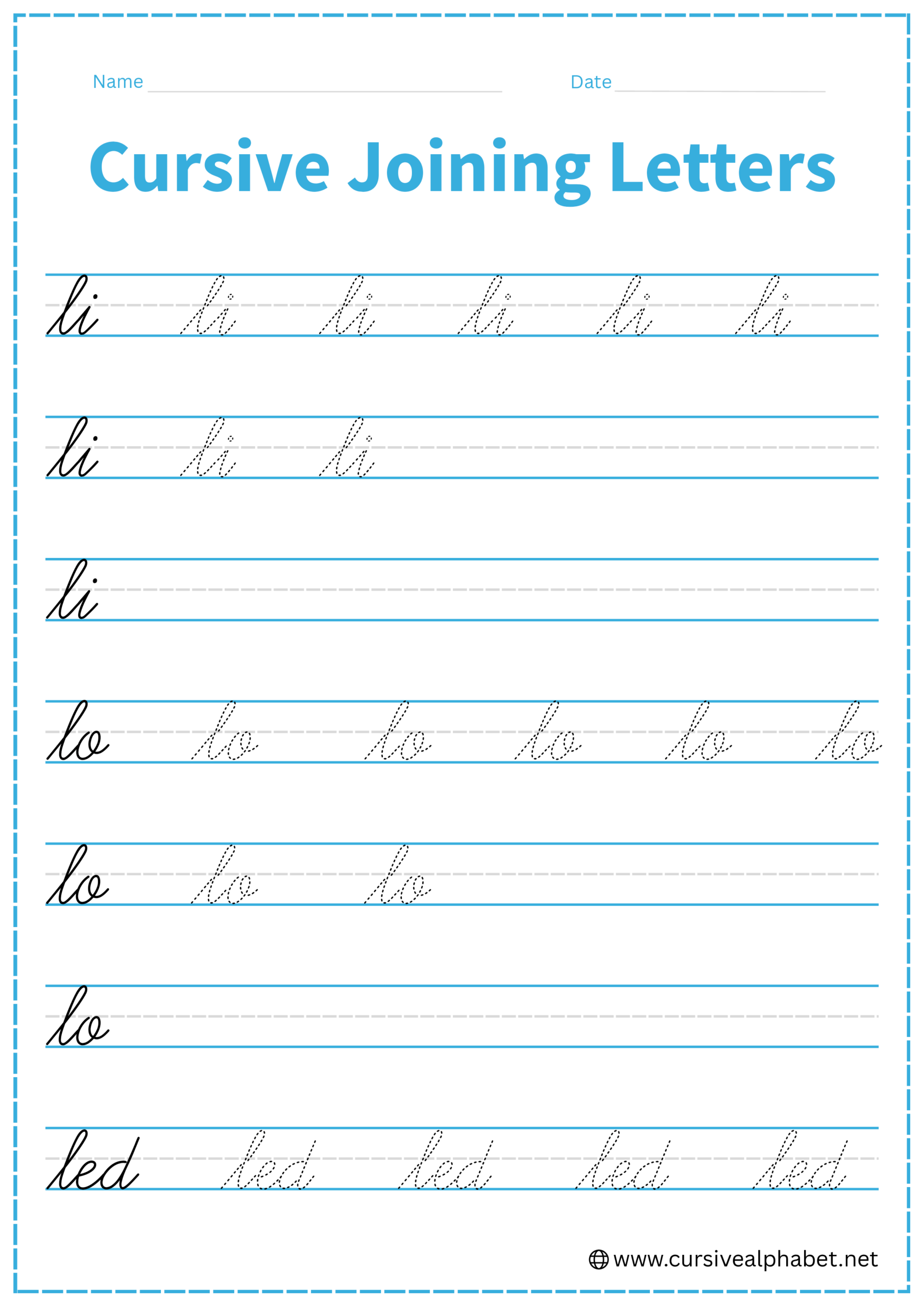
Cursive joining letters are the key to developing smooth, connected handwriting. This page helps you learn how to join cursive letters correctly using clear examples and guided practice. Whether you’re a beginner or improving your skills, mastering letter connections will help you write faster, more neatly, and with better flow.
Cursive joining letters are the connections between letters in cursive writing that allow you to write words in a smooth, continuous flow without lifting your pen.
Cursive joins improve writing speed, maintain consistent spacing, and make handwriting more natural and readable. Without proper joins, cursive writing can look uneven or broken.
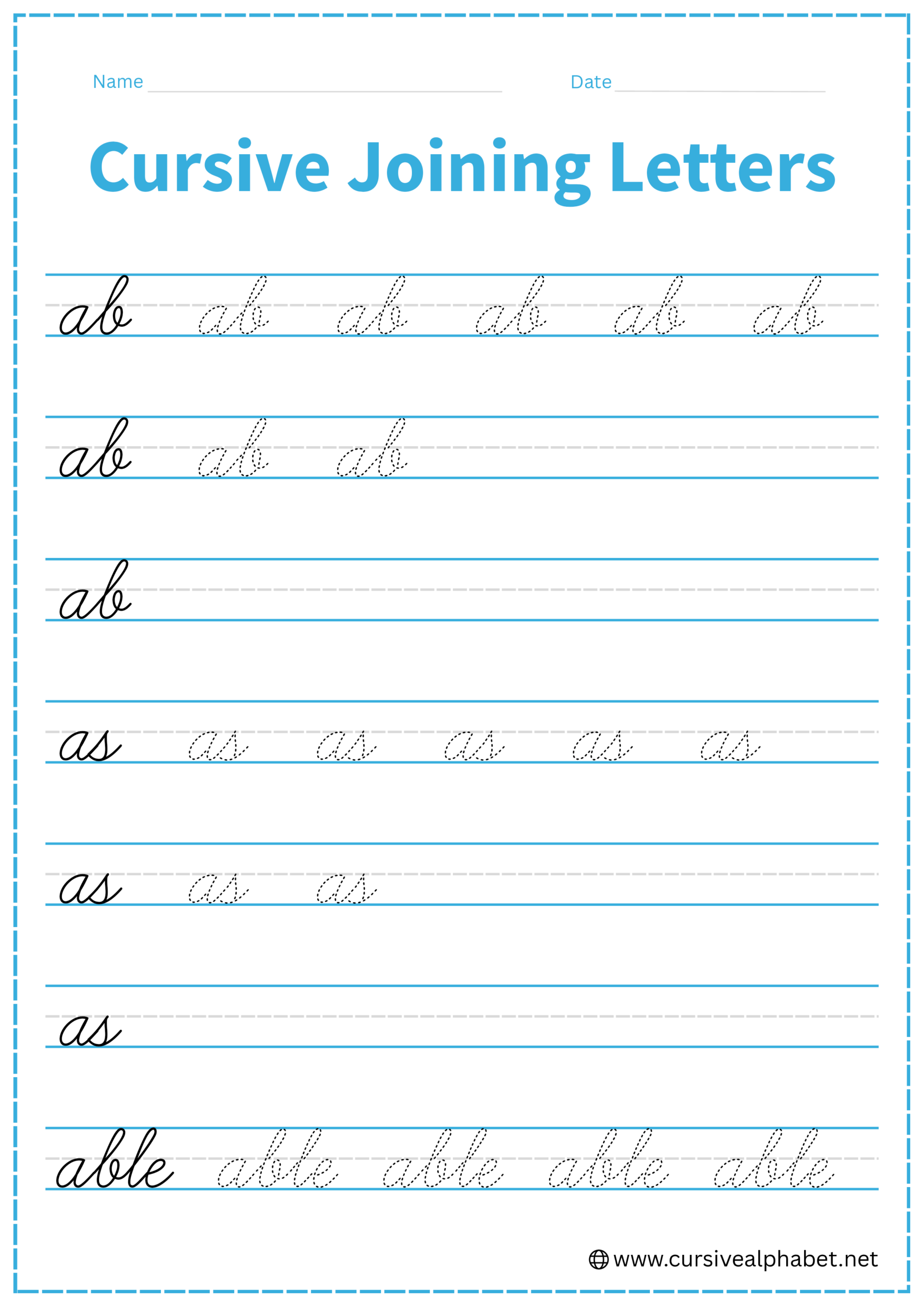
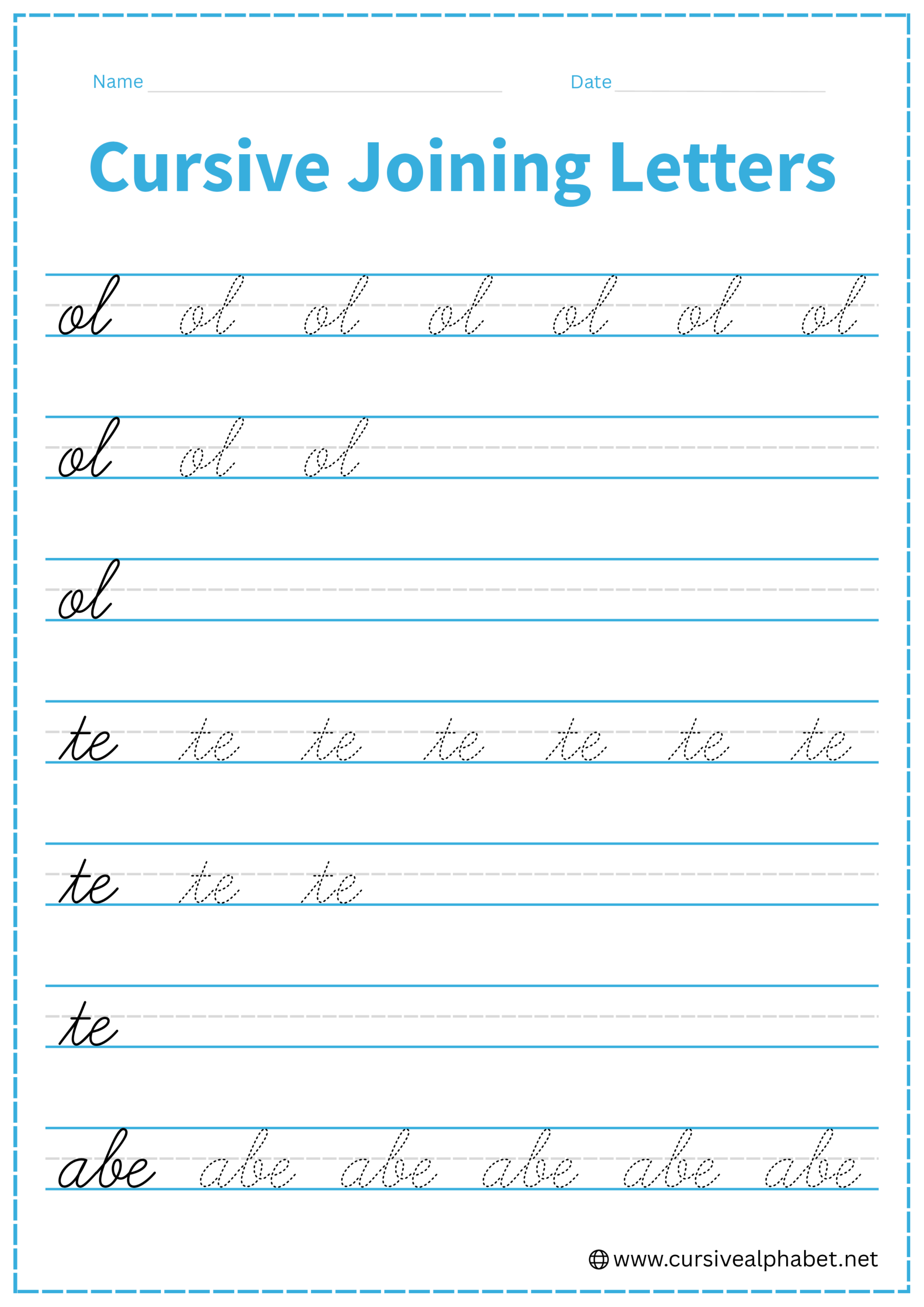
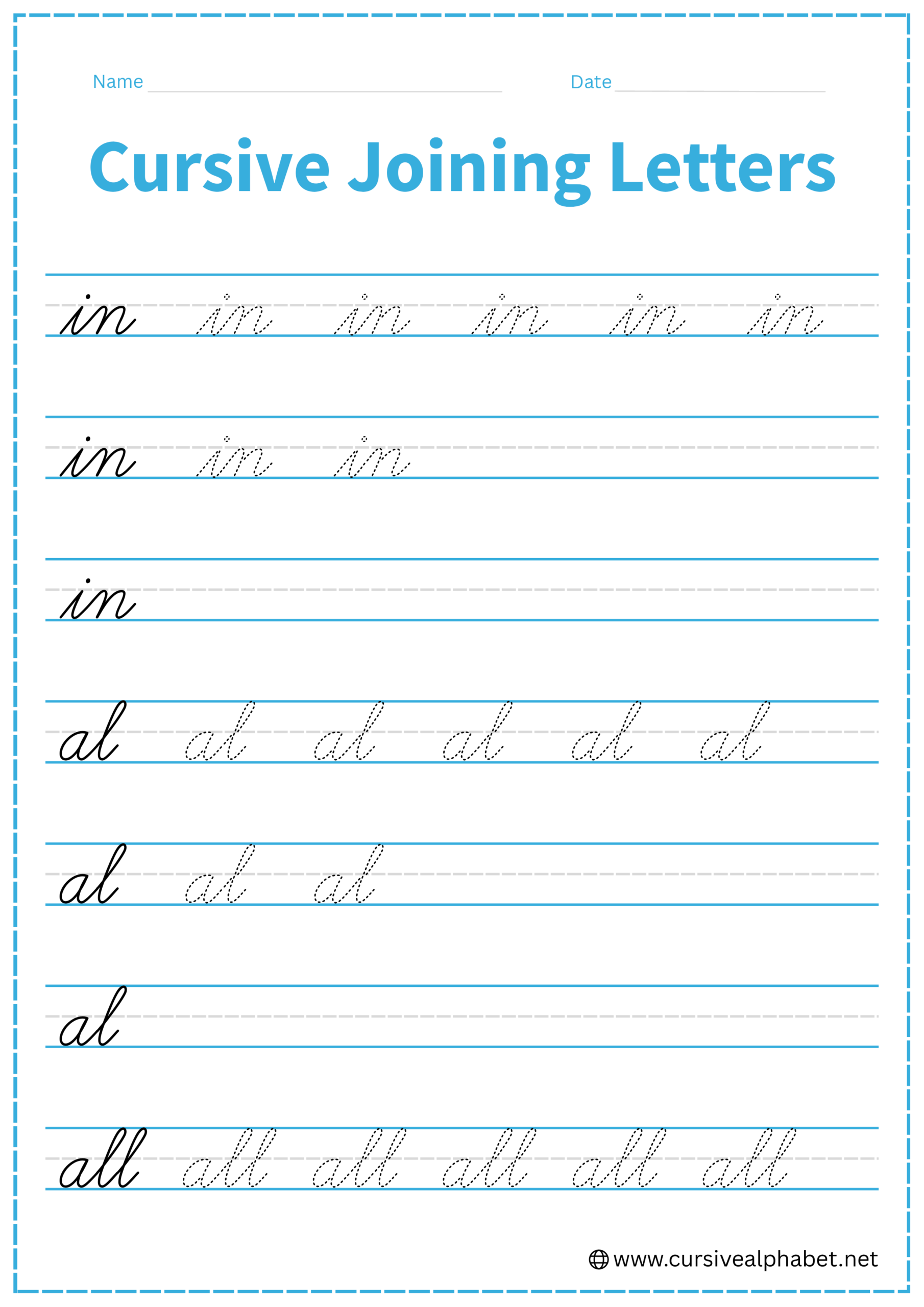
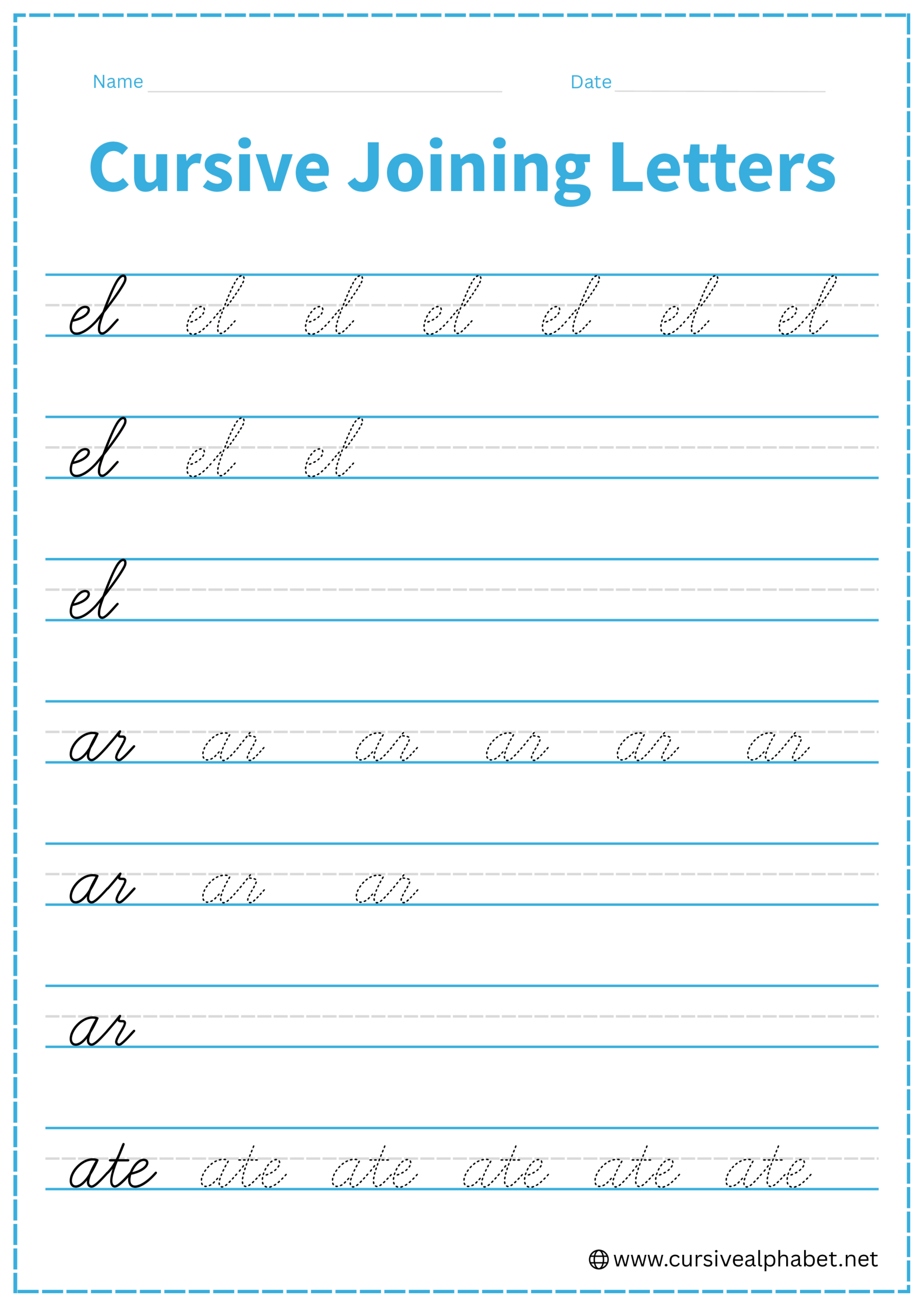
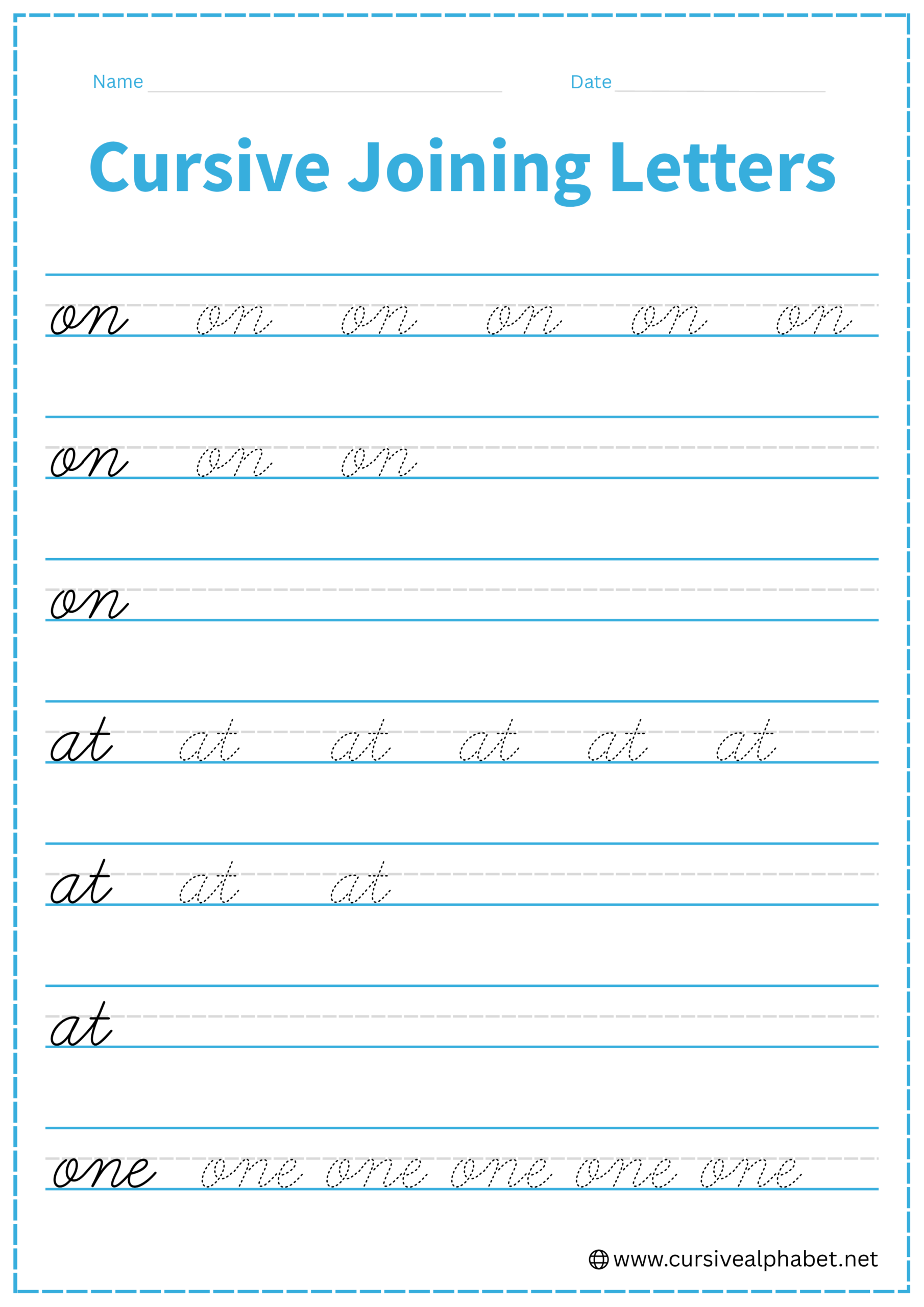
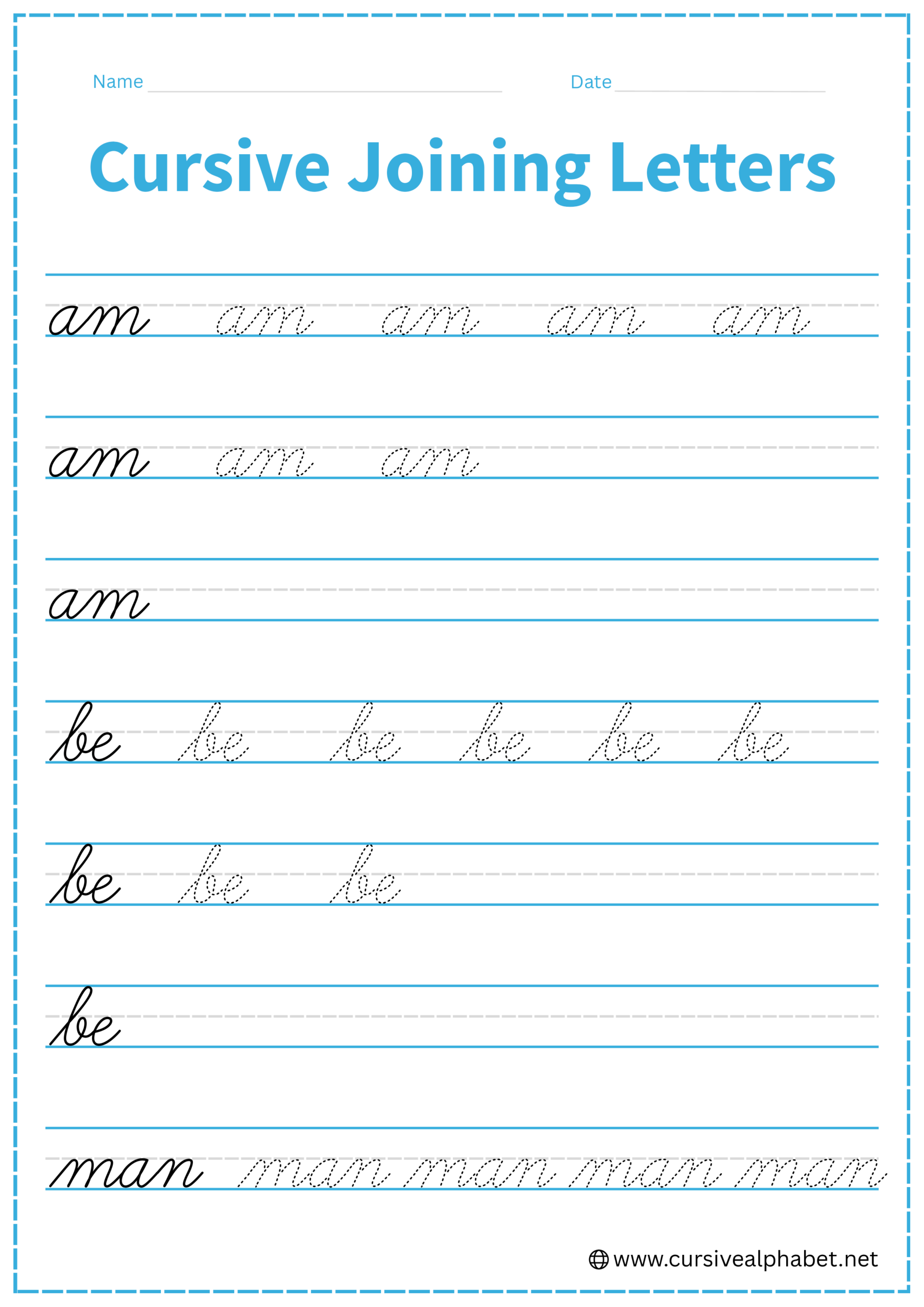
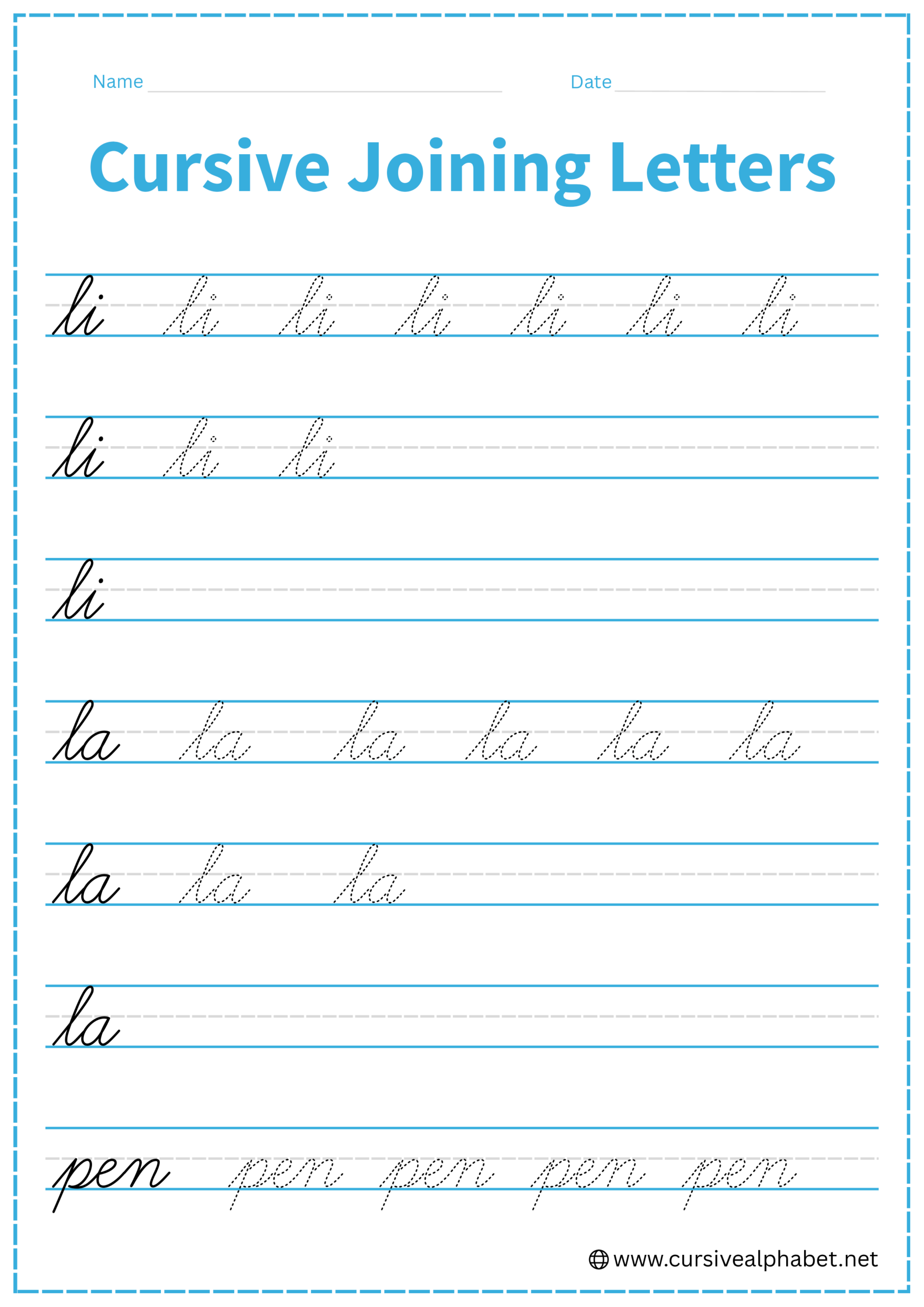
Start with simple two-letter combinations, such as an, ab, in, and ol, then move on to three-letter patterns, like and, ate, and one. Use cursive joining letter worksheets, guided lines, and repeat each combination to build muscle memory.
Some common cursive joins include “an”, “in”, “on”, “at”, “re”, “ol”, “te”, and three-letter combinations like “and”, “man”, “pen”, and “ten”. These appear frequently in everyday words.
Cursive joins can be grouped into baseline joins, mid-zone joins, and top joins. Each type depends on where the connection starts and ends between letters.
This usually happens due to lifting the pen too often, inconsistent slant, неправиль spacing, or incorrect stroke formation. Practicing basic joins slowly can help fix this.
Beginners should first learn individual cursive letters, then move on to joining letters. Once you understand letter shapes, joins become much easier to learn.
Yes, cursive worksheets are one of the best ways to practice. They provide structured tracing, guided writing, and repetition to improve flow and accuracy.
Focus on common letter joins, maintain consistent spacing and slant, and practice daily using worksheets. Start slow and gradually increase speed as your flow improves.